
Imperial Productions 43 views Claim this Business♡
×-
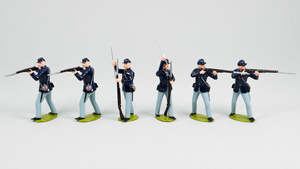 A6 Union InfantryIn 1861, at the outbreak of the Civil War, the regular Union Army had an existing set of Dress Regulations, prescribing for infantry both dress and fatigue uniforms.This set of figures depicts men uniformed and equipped for campaign with the fatigue cap, fatigue sack coat, cartridge box, percussion ...Visit Store 0 0
 -
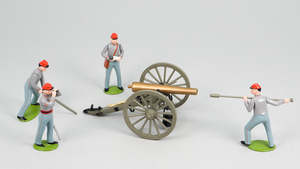 A2 Confederate ArtilleryAt the onset of the Civil War, the artillery of the Confederacy was dependent on what was taken from southern Federal arsenals, what was in the possession of the Southern Militia units and after early successes in battle on captured Union Artillery.Little ammunition had been made in the South for ma...Visit Store 0 0
 -
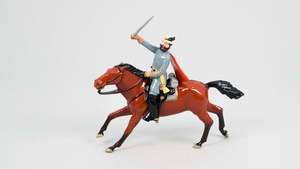 A23 Major General J. E. B. StuartMajor General J.E.B. (James Ewell Brown) Stuart was the Confederacy’s most celebrated cavalry commander, known for his boldness, mobility, and flair. Dressed in a plumed hat and often accompanied by banjo-playing troopers, he embodied the romantic image of the Southern cavalryman. Stuart excelled ...Visit Store 0 0
 -
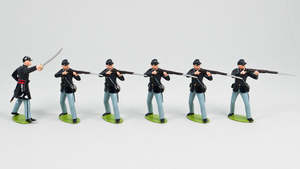 A5 Union InfantryIn 1861, at the outbreak of the Civil War, the regular Union Army had an existing set of Dress Regulations, prescribing for infantry both dress and fatigue uniforms.This set of figures depicts men uniformed and equipped for campaign with the fatigue cap, fatigue sack coat, cartridge box, percussion ...Visit Store 0 0
 -
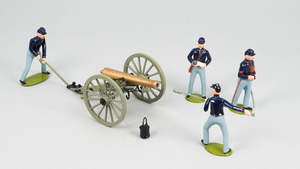 A1 Union ArtilleryThis smoothbore weapon was developed in France in the 1850’s and named for Emperor Napoleon III. Adopted by the United States Army in 1857 the Napoleon became termed the ‘workhorse" of Civil War Artillery, for its manoeuvrability and the range of ammunition that could be fired. Solid shot was fo...Visit Store 0 0
 -
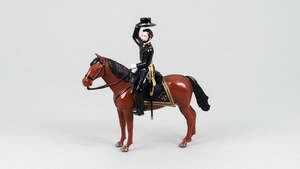 A3 General Ulysses S. GrantUlysses S Grant was a West Point graduate and served in the Mexican American War, returning to Civilian life in 1854. He joined the Union Army shortly after the start of the Civil War and became one of the Union’s most important generals. After early successes in the Western Theater—capturing Fo...Visit Store 0 0
 -
 A6 Union InfantryIn 1861, at the outbreak of the Civil War, the regular Union Army had an existing set of Dress Regulations, prescribing for infantry both dress and fatigue uniforms.This set of figures depicts men uniformed and equipped for campaign with the fatigue cap, fatigue sack coat, cartridge box, percussion ...Visit Store 0 0
 -
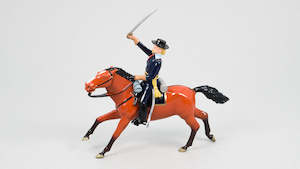
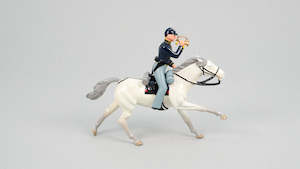
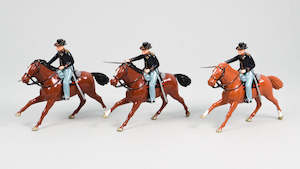 A15 Union CavalryIn 1861 all Federal cavalry was reorganized into six regiments with the 2nd Dragoons becoming the 2nd Regiment of Cavalry. Their uniform facings were to be yellow, but the cherished dragoon orange was permitted to be ‘worn out’ enabling the regiment to prolong the thorough execution of the order...Visit Store 0 0
 -
-
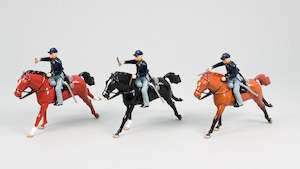 A28 Union CavalryWith the first two years of the Civil War bringing little advantage to either side, it became apparent how inferior in training and tactics the Union cavalry was when compared to those of the Confederates. This situation was to change however, as a group of brilliant young Union officers emerged, wh...Visit Store 0 0
 -
-
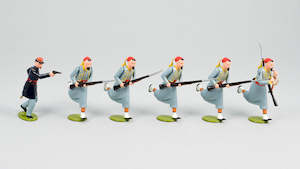 A27 146th New York InfantryIn the early years of the Civil War, many American military fashions were influenced by those of the French Army, and none more so than those regiments uniformed as the French Zouaves of North Africa, a style greatly admired by the populace.In the spring of 1863 it was realised that the colourful zo...Visit Store 0 0
 -
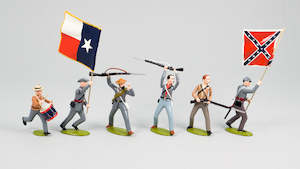 A26 Texas Brigade, Colour PartyThe ‘Texas Brigade’ under the command of General John Bell Hood was composed of 1st, 4th, 5th Texas Infantry regiments, and the 3rd Arkansas.In the early days of the war the 1st Texas carried the Lone Star flag which was made from the wedding dress of Mrs. Wigfall, the wife of the regiment’s c...Visit Store 0 0
 -
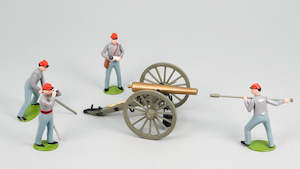 A2 Confederate ArtilleryAt the onset of the Civil War, the artillery of the Confederacy was dependent on what was taken from southern Federal arsenals, what was in the possession of the Southern Militia units and after early successes in battle on captured Union Artillery.Little ammunition had been made in the South for ma...Visit Store 0 0
 -
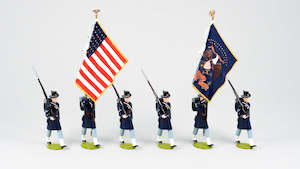 A24 Iron Brigade, Colour PartyIn the spring of 1862, West Pointer John Gibbons was assigned to command the Army of the Potomac’s only all western brigade, composed of the 2nd, 6th and 7th Wisconsin and the 19th Indiana Regiments.Whilst developing the brigade to a high efficiency, Gibbons also distinguished the appearance of hi...Visit Store 0 0
 -
-
-
-
-
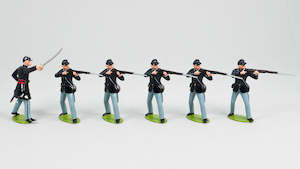 A5 Union InfantryIn 1861, at the outbreak of the Civil War, the regular Union Army had an existing set of Dress Regulations, prescribing for infantry both dress and fatigue uniforms.This set of figures depicts men uniformed and equipped for campaign with the fatigue cap, fatigue sack coat, cartridge box, percussion ...Visit Store 0 0
 -
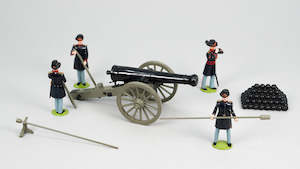 A12 Union Heavy ArtilleryThe Union artillery class of siege and garrison was determined by pieces that could be moved on carriages by road, to form the siege train of an army. The 24-pounder smoothbore model of 1839 was among the heaviest pieces.This set depicts men of the heavy artillery in full dress uniforms worn on camp...Visit Store 0 0
 -
-
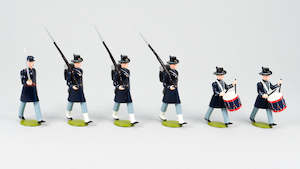 A25 Iron BrigadeIn the spring of 1862, West Pointer John Gibbons was assigned to command the Army of the Potomac’s only all western brigade, composed of the 2nd, 6th and 7th Wisconsin and the 19th Indiana Regiments.Whilst developing the brigade to a high efficiency, Gibbons also distinguished the appearance of hi...Visit Store 0 0
 -
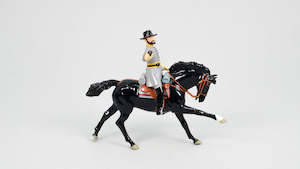
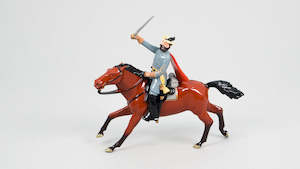
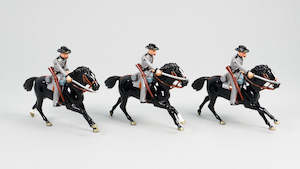 A17 Confederate CavalryThe 1st Virginia Cavalry was formed early in 1861 under the command of Major James Ewell Brown (‘Jeb’) Stuart, and by the summer its strength had increased from four to ten companies. Serving with the Army of Northern Virginia throughout the war it took part in the actions of First and Second Bu...Visit Store 0 0
×