
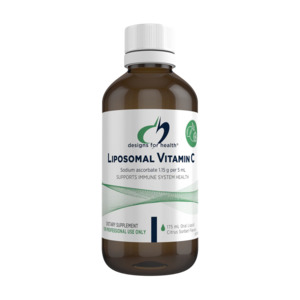
Liposomal Vitamin C - Liquid (DU-AU)
To access our exclusive Practitioner range supplements, you have the following options:
- Complimentary Consultation (Up to 15 mins - Free): A quick phone call to ensure the product suits your needs. Ideal if you know which supplements you want. Request your free consultation.
- Provide a Script or Referral: From a qualified health professional. Click here.
- Already registered?: For those already working with us, just enter your referral code. Click the chat box if you have lost your code.
Looking for Personalized Health Guidance?
- Warrant of Health Consultation (Up to 60 mins - Paid): This comprehensive service is designed for individuals seeking specific health recommendations for conditions or issues. Available via video conference, phone call, in person or email. For tailored health advice and building of a plan book here.
175 Mls
- New Delicious Citrus Sorbet Flavour
- Provides 1 g vitamin C per 5 ml dose
- New innovative proprietary Liposomal Technology for optimal absorption and delivery
- Batch tested for Zeta Potential to ensure quality
- Helps stimulate a healthy immune system response
- Supports wound healing
- Maintains collagen health
- Assists connective tissue formation and supports connective tissue health
- Supports a healthy stress response in the body
- Vegan and vegetarian friendly, gluten and dairy-free formula
:
Liposome structure and function
A liposome is a vesicle made up of at least one phospholipid bilayer, which can be used to deliver hydro- or lipophilic drugs into the cell. The liposome vesicle’s phospholipid bilayer merges with the phospholipid bilayer of the cell wall, releasing the nutrient into the cell interior (see image)
Liposomes can range in size, with smaller vesicles giving greater absorption and cellular uptake, being cleared at a slower rate giving greater opportunity for absorption, and being able to be absorbed from the buccal cells meaning they get to the cell more quickly than waiting for absorption into the bloodstream from the stomach. The liposomes in Designs for Health products are 50-100nm in size.
Design for health's Liposomal vitamin C provides this key foundational nutrient formulated with Liposomal Technology for optional absorption and bio-availability. Each 5ml serving provides 1000mg of sodium ascorbate, with the sodium facilitating the absorption of vitamin C via the sodium-dependent transporters. Vitamin C is the key nutrient of the Immune system, adrenal function, collagen formation, skin and cardiovascular health. Vitamin C also offers antioxidant support via its ability to recycle vitamin E and glutathione.
Benefits of liposomal delivery
- Facilitates absorption in the buccal cells
- Facilitates gastrointestinal uptake
- Prevents breakdown by stomach acid
- Able to incorporate both hydro- and lipophilic agents
- Reduces risk of side effects
- Increased circulation time with smaller nanoparticles (inverse relationship between particle size and clearance time)
- Increased absorption with smaller particle size (9-fold increase from 236nm to 97nm and 34-fold higher at 64nm)
- Increased patient compliance for those who cannot or prefer not to swallow tablets
- Increased ability for flexible dosing
Immune system support
Ascorbic acid (vitamin C) is commonly linked to the immune system. In vitro, vitamin C has been shown to positively affect the production and function of neutrophils, lymphocytes and phagocytes. Vitamin C is also protective for these leukocytes, neutralising the reactive oxygen species (ROS) released by leukocytes to kill pathogens before they can damage healthy endogenous cells. Other In vitro studies have shown vitamin C to increase interferon production – a type of cytokine with an antiviral effect. For daily immune system support, vitamin C intake should be at a level which maintains or saturates plasma levels – 100- 200mg per day minimum – while intake during infection should be considerably higher to meet the increased demand.
Collagen health
Vitamin C acts as an important cofactor for the hydroxylation of proline and lysine – a necessary step in collagen formation. In vitro, treatment with vitamin C increased collagen secretion in skin fibroblasts and resulted in more pepsin-resistant collagen. It is more difficult to measure the effect of vitamin C on colla