
Dr Brown's | Narrow OPTIONS + 250ml Bottle
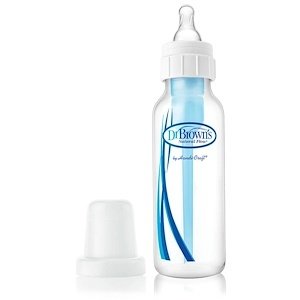
Narrow Neck Options PLUS bottles are only compatible with narrow Neck Options PLUS teats
Contents: 1 x Dr Brown's Options PLUS Wide Neck Baby Bottle 150ml Level 1 teats 1 teat/vent cleaning brush.
Dr. Brown’s Options:
The market’s first convertible bottle that can be used with or without the vent system. The new vent system is designed to grow with baby, and we recommend using this system to experience all the health benefits of our bottle. It helps reduce feeding problems, helps digestion and helps preserve vitamins. Some moms and dads find removing the vent a convenient option as their baby’s feeding becomes more developed. The teat venting creates a paced flow, and provides a feeding experience similar to most teat-vented bottles. Options bottles fit most breast pumps, and are BPA-free.
- Simply the Best Baby Bottle
- 0 Months - Level 1
- Reduces Colic Spit-Up, Burping & Gas
- Helps Preserve Vitamins - C, A E plus Lipids
- Fits Most Breast Pumps
- Vacuum-Free Feeding Helps Digestion
- BPA Free
Contents:
- 1 - 8 oz / 250 ml baby bottle
- 1 - Level 1 silicone nipple
- 1 - Cleaning brush
- Instructions
Helps reduce feeding problems - Our bottles are known for reducing colic, spit-up, burping and gas
Proven to help preserve bottle milk nutrients - Vitamins C, A, and E are critical for health in infancy
Vacuum-free feeding helps digestion - Good digestion is essential for babies, particularly newborns
Fully-vented bottle design - Closest to breastfeeding
Internal Vent System and silicone nipple work together - Controlled flow so babies feed at their own pace
How They Work: Bottles
Dr. Brown's bottle features a patented two-piece internal vent system that works unlike any other bottle design. The vent system fully vents their bottle for vacuum-free feeding, which they call positive-pressure flow, similar to breastfeeding. As the baby feeds, air is channeled from the nipple collar through the vent system, bypassing the breastmilk or formula, to the back of the bottle. Air never mixes with the breastmilk or formula which minimizes oxidation and helps preserve essential nutrients like vitamins C, A and E.
Babies feed more comfortably because the vent system allows them to nurse without fighting the negative effects of a vacuum or the discomfort of ingesting air bubbles. This helps to reduce feeding problems like colic, spit-up, burping, and gas. The breastmilk or formula flows freely, without nipple collapse.
Dr. Brown's Nutrient Study
New Study Reveals Loss of Vitamins A, C, & E in Some Baby Bottles During 20-Minute Simulated Feeding
A newly released study revealed that after a 20-minute bottle feeding, three important nutrients for infants–vitamins A, C and E–all declined during the course of feedings. The results suggest that the amount of air within a baby bottle, the bottle's design, and the impact on vitamin levels warrant closer examination.
How The Study Was Conducted
The study, "Comparative Analysis of Retinol, Ascorbic Acid, and Alpha-Tocopherol in Baby Milk Using Varied Delivery Systems," was conducted at the University of Nevada-Reno. The bottle study was designed to investigate changes in nutrient levels that might occur during a typical bottle feeding time of 20 minutes, using both expressed human milk and infant formula, in both vented bottles and unvented bottles. The study looked at the amount of nutrients in the milk when delivered through seven commonly used baby bottles, including Dr. Brown's. The purpose was to determine if exposure to air within a baby bottle during a simulated feeding affected nutrient levels.
Dr. Brown's Bottles Preserve Nutrients When Others Don't
The graph demonstrates the loss of vitamin C during a 20-minute simulated feeding. While vitamin C began to decline at 5 minutes as shown by this graph, vitamins A and E declined later. Vitamin C prevents oxidation of nutrients and, as it is lost, other nutrients are more susceptible to damage. The Food and Nutrition Board at the Institute of Medicine recommends a vitamin C intake of 40 mg per day, 3 mg of Vitamin E and 400 mcg of vitamin A for infants up to six months old.
The Importance Of Nutrients For Babies
All three vitamins studied are important in infant health and growth. Medical research shows that children with low intakes of vitamin C are more vulnerable to developing frequent and more severe common day-to-day illnesses. Inadequate intake of vitamin E can lead to anemia and degeneration of the spine and brain. In infants, a low intake of vitamin A disrupts bone growth and interferes with