
Liquorice root 1:1
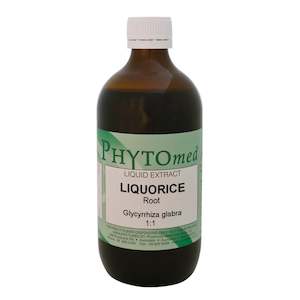
Botanical name: Glycyrrhiza glabra
Common name: Liquorice, licorice
Plant part: Root
Strength: 1:1
Source (Organic or Trade): Trade
Country of Origin: Israel
Weekly Dosage (mL): 10-30mL
Actions: Anti-inflammatory, Adrenal tonic, Antitussive, Demulcent, Expectorant, Mucoprotective, Laxative (mild)
Main indication: Adrenal depletion, autoimmune conditions, chronic fatigue syndrome, cough, bronchitis, sore throat, gastritis, GORD, peptic ulcer, PCOS, female fertility. Topically: cold sores, shingles, mouth ulcers
Safety information: Contraindicated with hypertension, hypokalaemia, oedema, congestive heart failure.
Drug Interactions: Antihypertensives - Interference with hypotensive effects, with prolonged use of large doses
Azathioprine - Lowered risk of hepatotoxicity possible
Corticosteroids - Theoretical potentiation of steroidal effects
Digoxin - Hypokalaemia leading to adverse cardiovascular effects, if large doses taken
Lignocaine - Enhanced drug clearance in rats reported for Glycyrrhiza uralensis (Chinese liquorice)
Thiazide and Loop Diuretics - Hypokalaemia with adverse effects especially likely when combined with digoxin as above
Article: Liquorice protective against azathioprine hepatotoxicity (2006)
Pharmacokinetics of glycyrrhizin (2005)