
×
About this listing
Shoppo is an independent New Zealand shopping discovery platform.
We do not sell products ourselves.
Products on this page are sold by Science Resource Box on their own website.
Clicking "Visit Store" takes you directly to the retailer.
Own this business?
Claim your listing or request removal.
Science Resource Box 46 views Claim this Business♡
scienceresourcebox.co.nz +64 21 231 1140 Science Resource Box 55 Eastfield Drive Lincoln 7608 Canterbury, Lincoln
×
-
 $143Daphnia live culture 4-PackOften called water fleas, Daphnia are small crustaceans that are one of the most studied living organisms. They can be used to investigate the compound eye, digestive system, reproductive system, appendages used for movement and life cycle stages. They also make great experimental animals, commonly...Visit Store 0 0
 -
 $23.95Daphnia live cultureDaphnia culture for sale. Often called water fleas, Daphnia are small crustaceans that are one of the most studied living organisms and are very popular in Secondary School Science and Biology. They can be used to investigate the compound eye, digestive system, reproductive system, appendages used f...Visit Store 0 0
 -
 $143Daphnia live culture 8-PackOften called water fleas, Daphnia are small crustaceans that are one of the most studied living organisms. They can be used to investigate the compound eye, digestive system, reproductive system, appendages used for movement and life cycle stages. They also make great experimental animals, commonly...Visit Store 0 0
 -
 $23.95Paramecium live cultureThese large paramecia are an ideal unicellular organism for study under a compound microscope. Visible are internal organalles (contractile vacuoles, macronucleous, food vacuoles, oral groove,.) and also their external beating cilia, using 100–200x magnification. Motility is by use of cilia and th...Visit Store 0 0
 -
 $7.95Daphnia micro packA pack containing three important items for studying live water fleas (Daphnia) under the microscope: - pipettes with large holes to prevent damage to water fleas when transferring them to a slide; pipettes not intended for volume measurement- concave slides (slides with a shallow cavity) that hold...Visit Store 0 0
 -
 $9.95Nature's Helicopters (Science L2–3)A pack containing sycamore seeds for engaging discovery-type activities and for simple investigations into spinning flight. See how spinning flight helps the seeds disperse away from the parent plant. A teacher's guide gives starter questions and investigation ideas. Great for engagement, observatio...Visit Store 0 0
 -
 $9.95Seed Dispersal (Science L3–5)A pack containing sycamore seeds for engaging investigations relating to spinning flight and seed dispersal. The teacher's guide gives starter questions and investigation ideas. Great for observations and inferences, comparisons, fair tests/controlled experiments and biomimicry investigations.Pack c...Visit Store 0 0
 -
 $14.95Tree lucerne seeds (NCEA Level 2 Bio, AS 2.3)Seeds of tree lucerne, otherwise known as tagasaste (Chamaecytisus palmensis). Use for germination experiments involving breaking dormancy by three different methods of scarification. Or, just grow the plants!The treeTree lucerne is an introduced, small, fast growing, evergreen tree reaching 6 metre...Visit Store 0 0
 -
 $9.95Pollen (Insect pollinated species)Pollen from a named flower species, representative of the typically large, sticky pollen grains that insect pollinated plants produce.Use for microscopic examination.Tips: - Use a fine paint brush to extract tiny quantities at a time.- A dry mount using a coverslip works best. - Compare bottom light...Visit Store 0 0
 -
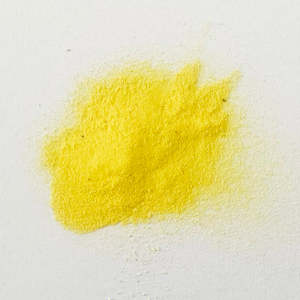 $9.95Pollen (Wind pollinated species)Pollen from a named tree species, representative of the typically small, smooth pollen grains that wind pollinated plants produce.Use for microscopic examination.Tips: - Use a fine paint brush to extract tiny quantities at a time.- A dry mount using a coverslip works best. - Compare bottom lighting...Visit Store 0 0
 -
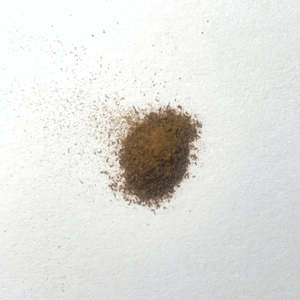 $9.95Fern sporesSpores of the native Parablechnum montanum fern. (Previously known as Blechnum montanum.)Spores are haploid (N) and produced by the sporophyte generation of ferns.Use for microscopic examination. Not intended for sowing.Tips: - Use a fine paint brush or toothpick to extract tiny quantities at a time...Visit Store 0 0
×