
×
About this listing
Shoppo is an independent New Zealand shopping discovery platform.
We do not sell products ourselves.
Products on this page are sold by Sue Wickison Design on their own website.
Clicking "Visit Store" takes you directly to the retailer.
Own this business?
Claim your listing or request removal.
Sue Wickison Design 11 views Claim this Business♡
×-
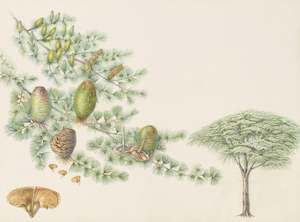 Cedar of LebanonThe Qur’ānic name sidr, and sidrat-al-muntahā or ‘the lote tree of the utmost boundary’, alludes to the ’s great height, strength and beauty.One of the most majestic evergreen trees in South-West Asia, Cedrus libani holds a mystical place in stories and legends, such as the Sumerian poem T...Visit Store 0 0
 -
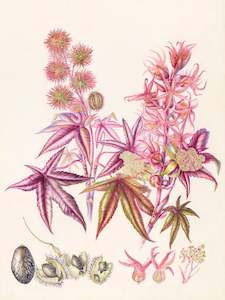 Castor OilAccording to some authorities, the Qur’ānic word yaqṭīn refers to the castor oil plant, Ricinus communis.Commonly called the castor bean, castor oil can be extracted from the seeds of this plant.Although possessing some valuable medicinal properties, it is noted in the Guinness World Records a...Visit Store 0 0
 -
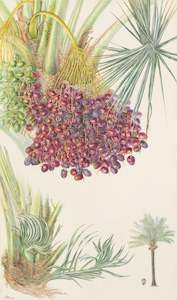 Date PalmAn old Arabic saying is ‘the uses of the date palm are as many as the days in a year’. The date palm, or nakhl, produces the date fruit; dates are considered as fruit, food, medicine, drink and sweetmeat.Many fruits and fruit-bearing plants have been mentioned in the Qur’an, but it is the date...Visit Store 0 0
 -
 Date Palm FlowersThe date palm, Phoenix dactylifera is known to have been of great importance in the Arabian Peninsula and the Middle East since ancient times. Date stones have been excavated at numerous sites in the Middle East and North Africa. Often cultivated in gardens, date palms can withstand a hot, dry clima...Visit Store 0 0
 -
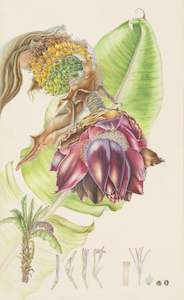 Ethiopian False BananaOne of the translations for the word talḥ is a banana tree. It appears once in the Qur’ān in reference to one of the blessings that believers will receive after the Day of Judgement: ‘They will dwell amid thornless Lote trees and trees of clustered banana.’Native to Eastern Africa, Ensete v...Visit Store 0 0
 -
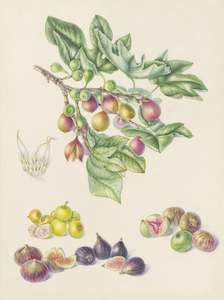 FigThe Arabic word tīn, as it appears in the Qur’ān, may refer to a mystical tree growing in Paradise. In this context, the fig is presented as just as important as the olive for all its properties and uses: ‘I swear by the fig tree and the olive.’Ficus carica is native to the Middle East and w...Visit Store 0 0
 -
 GarlicThe Arabic name thōm and the Qur’ānic name fūm have been used for garlic.There is a singular mention of garlic in the Qur’ān, where on their journey from Egypt the Israelites plead with Moses to ask God to add variety to their monotonous diet.Growing up to 1.5 metres tall, the flowering head...Visit Store 0 0
 -
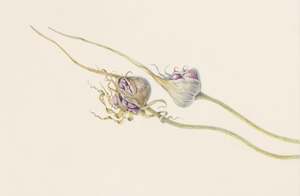 Garlic BulbGrowing up to 1.5 metres tall, the flowering heads produce bulbils (miniature clone plants) that are capable of growing into new plants when they fall to the ground. It is thought that garlic and onions were first domesticated in the mountainous regions of central Asia.Painted from specimens found i...Visit Store 0 0
 -
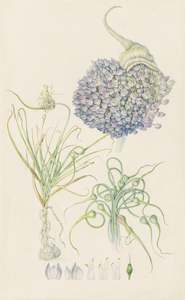 Garlic FlowersGarlic flowers were painted from specimens found in Blenheim, New Zealand.The garlic flower is an umbel at the end of the stem or scape and produces a large number of flowers that turn to bulbils that can be planted out. The cap that contains the flowers dries and splits away from the stem allowing...Visit Store 0 0
 -
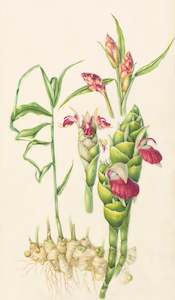 GingerThe Arabic name zanjabīl appears once in the Qur’ān, "with those who have done good deeds on Earth receiving a drink mixed with ginger when they are in Heaven".This flowering plant with a subterranean stem or rhizome is widely used as a fresh or dried spice and herbal medicine.Originating in Sou...Visit Store 0 0
 -
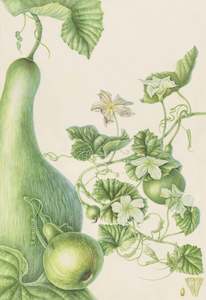 Bottle GourdThe Qur’ānic word Yaqtīn, mentioned once in the Qur’ān, is believed by some authorities to refer to a Gourd. It is mentioned in reference to Jonah, who was swallowed by a whale. Upon repenting and being cast ashore, he rests beside a yaqtīn plant.or Lagenaria siceraria was common in the anci...Visit Store 0 0
 -
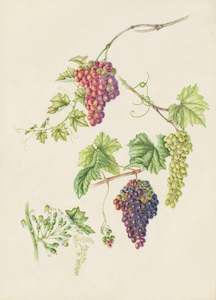 GrapeThe words inab, khamr, sakr and kasan are various names for the grape mentioned in the Qur’ān, often in combination with olive, fig, date palm and pomegranate, indicating the prominence of these fruits.The common grape, Vitis vinifera is one of some 65 species in the genus Vitis, found in the nor...Visit Store 0 0
 -
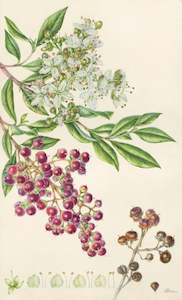 HennaThe plant associated with the Qur’ānic name kafūr is disputed. The name occurs once in the Qur’ān; it could refer to grape blossoms or a sheath of palm tree pollen. In some translations it refers to camphor, obtained from the wood of the camphor tree, but some translate it as henna, a term us...Visit Store 0 0
 -
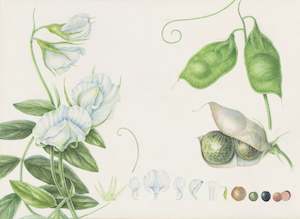 LentilsThe term adas, meaning lentil, is referred to in the Qur’ān as one of the foods that the followers of Moses were used to eating in Egypt., Lens culinaris, are seeds contained in a small fruit pod. Archaeological evidence suggests that lentils began to be cultivated as a domestic crop around the s...Visit Store 0 0
 -
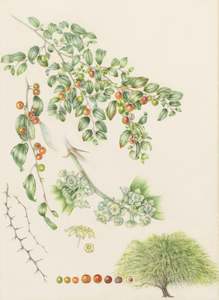 Lote TreeSome authorities believe the Qur’ānic name of sidr refers to sidrat-al-muntahā (meaning ‘lote tree of the utmost boundary’), Ziziphus spina-christi, also known known as the Christ's thorn jujube.The lote tree is said to be located either in the sixth or seventh heaven and marks the point bey...Visit Store 0 0
 -
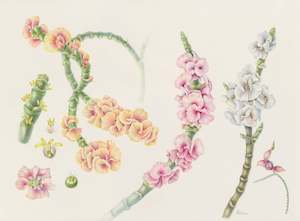 MannaThe Arabic word man, meaning ‘gift’, is used three times in the Qur’ān. refers to a sweet substance excreted by insects on certain plants. It was first documented by Islamic scholar Al-Birūnī (973–1050) in his Book on the Pharmacopoeia of Medicine.Haloxylon salicornicum is a flowering des...Visit Store 0 0
 -
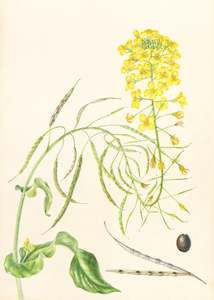 Mustardmentioned twice in the Qur’ān, both for its seed and for the minuteness of its size and weight: ‘If it be the weight of a grain of mustard, and it be in a rock…God will produce it.’Black mustard or Brassica nigra is native to South Asia and southern Europe. The name khardal is used for blac...Visit Store 0 0
 -
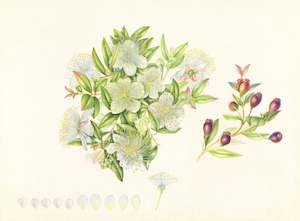 MyrtleThe Arabic word ās (or yās) for myrtle is associated with medicine and healing.an aromatic evergreen shrub, widespread throughout the Mediterranean and Middle East. It is naturalised in many areas, but also cultivated for its fragrance, edible fruits and medicinal qualities.In ancient cultures it...Visit Store 0 0
 -
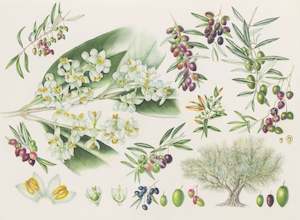 OliveThe olive or zaitūn is referred to in the Qur’ān as bearing oil and light, and as a blessed and useful tree.A classical tree of the Mediterranean, together with the fig and the grape, the olive, Olea europaea is one the oldest cultivated plants, dating back 7,000 years. Exports of olive oil from...Visit Store 0 0
 -
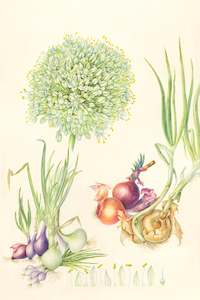 OnionBaṣal is the Arabic name for and it occurs once in the Qur’ān: ‘some of what the earth produces, its herbs and its cucumbers, its garlic, its lentils and its onions’.s form part of a large group of plants including garlic, leek and chives, distributed mainly in Central Asia. They have been...Visit Store 0 0
 -
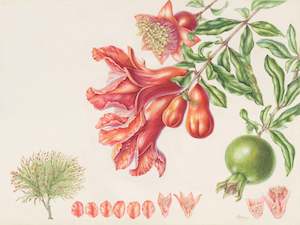 Pomegranate FlowersIn the Qur’ān, rummān or pomegranate, Punica granatum, is seen as a blessing, a symbol of Paradise, fertility, prosperity, and an illustration of the importance of not being excessive or wasteful.The pomegranate has long been a celebrated fruit in many different cultures, a symbol of fertility...Visit Store 0 0
 -
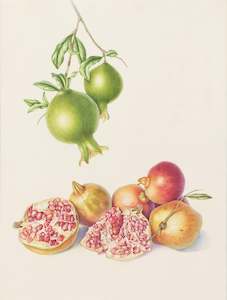 Pomegranate FruitIn the Qur’ān, rummān or pomegranate is seen as a blessing, a symbol of Paradise, and an illustration of the importance of not being excessive or wasteful. The pomegranate has long been a celebrated fruit in many different cultures, a symbol of fertility, prosperity, righteousness and eternal li...Visit Store 0 0
 -
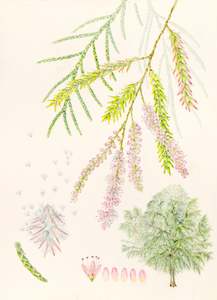 Tamarisk aphyllaIn the Qur’ān, tamarisk or athal is a kind of tree that grew in a wasteland after the flood sent to the tribe of Saba’ destroyed their cultivated fields.Tamarisk, Tamarix aphylla has a high resistance to saline soils, and its termite-proof timber is popular in the Arabian Peninsula as a buildin...Visit Store 0 0
 -
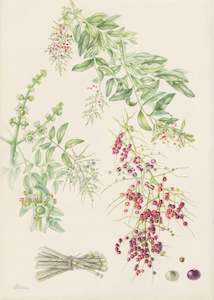 Toothbrush TreeThe plant referred to as khatm in the Qur’ān, thought to be Salvadora persica, is described as a tree or shrub bearing bitter or inedible fruit. In South-West Asia and India, young roots and stems of S. persica have been used for a long time to cleanse and strengthen teeth, freshen the breath and...Visit Store 0 0
×