
PPSS Garmentec Anti Spit Masks
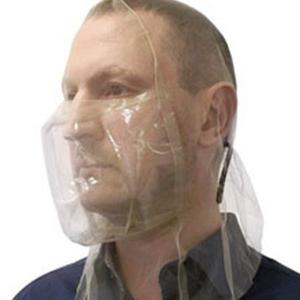
have been designed to effectively help protect homeland security, police officers and other frontline professionals from infectious diseases transmitted by a person spitting saliva or infected blood.
Spitting has well known serious potential health risks. It is not just the officer that is affected but also their family, as tests and treatment for suspected contagious diseases can last for several months and lead to severe stress and anxiety.
Despite controversy around the use of spit hoods (or spit guards), we are committed to protecting professionals from operational risks. When used correctly, our Anti-Spit Masks are breathable, worn without discomfort, and can be removed without contact with bodily fluids. This ensures our hardworking protectors go home safe at the end of their shift.
Features & Benefits
- Simple and fast to deploy
- Developed through intensive field testing
- Disposable
- Compact
- One size fits all
- Individually packed and labelled
- Allows you to observe your suspect’s face
- Excellent visibility
- Safe, secure and lightweight
- Available in box of 100 pcs only
Who is this product suitable for?
- Law Enforcement Officers (LEO)
- Homeland Security Agencies
- Prison & Correctional Officers
PPSS Anti Spit Mask Frequently Asked Questions
- How easy is it to put on? - Much easier than any other product on the market - no Velcro, no straps.
- Is it possible to get it off once someone is handcuffed? - No one has been able to remove one yet.
- How many PPSS Anti-Spit Masks are in a box? - 100 individually packed and labelled pieces.
- Can I buy individual anti-spit masks? - No.
- Is vision impaired when wearing the mask? - No.
- Is there any discomfort when wearing the mask? - No.
- Can eye contact be maintained once the mask has been fitted? - Yes.
- When a person has been spitting and especially if there is blood involved, how easy is it to remove the mask whilst containing any fluid now in the mask? - Follow the visual instructions provided on each packet and this process is simple clean and self-containing.
- If a person is hyperventilating will the mask be drawn to the mouth and cause additional panic? - No, if the mask is fitted correctly this will not happen. But, never leave a person unattended whilst wearing the mask.
- Are there other colours available? - No, not at the moment as this colour offers the clearest vision for both officers and the person wearing the mask.
- Who wears the mask, the officer or the prisoner? - We strongly suggest the combatant or aggressive member of the public will be requested/forced to wear it.
PPSS Anti-Spit Masks have effectively helped protect prison, police, law enforcement and security professionals as well as paramedics and other frontline staff from Hepatitis B and C and other infectious diseases such AIDS.
Unions representing the interest of the above professionals in countries around the world have for some time raised serious concerns about the increasing number of spitting incidents, as it has well known serious potential health risks. It is not just the officer that is affected but also their family, as tests and treatment for suspected contagious diseases can last for several months and lead to severe stress and anxiety.
During a recent court case (February 2015) against a 27 year old man who spat into a police officer’s face the leading judge said: “The actual assault of spitting is taken extremely seriously by the courts. Spitting is particularly distressing for victims – it’s a very nasty form of assault." I couldn’t agree more.
Headlines, which should ‘ignite’ discussions about anti spit masks:
- “Drunk woman vomited and spat in the face of police officer…"
- “Man spat into police officer’s face after 100mph car chase…"
- “Handcuffed woman spat in police officer’s face…"
- “Blood spat in officer’s face’ after disturbance in…"
- “Drunk nurse spat at police officers and abused ambulance…
- “Man ‘spat in police officer’s mouth following arrest’ in…"
Police in New Zealand have reported difficulties in restraining drunk and drugged people and preventing them from hurting themselves, according to NZ police magazine Ten-One. A two-year safety review of 8000 cases found nearly 10 per cent of offenders had spat at officers, who had limited tools to deal with it.
The ‘Reporting Services’ of the London Metropolitan Police published that ‘The Count Of Noticeable Offences where the classification method featured either the keyword ‘spit’, ‘spitting’ or