
Garrison World
www.rnz.co.nz ninetonoon interview with Charlotte MacDonald
The pivotal year of 1870 brought down the curtain on the redcoat garrison world at both the metropolitan and colonial ends of the empire. In fewer than forty years, less than a lifetime, Aotearoa had gone from being a Māori world in which rangatira dominated, to a colony in which the settler state was in control of the economy, politics and people’s social destiny.
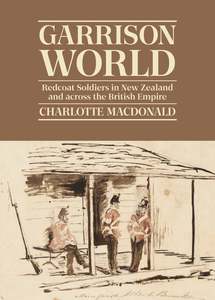
explores the lives of soldiers, sailors and their families stationed in Aotearoa New Zealand and across the British empire in the nineteenth century. Spanning the decades from 1840 to 1870, this major new history from Charlotte Macdonald places the New Zealand Wars within the wider framework of imperial power. It shows how conflict and resistance throughout the empire, from rebellion in India to the Morant Bay uprising in Jamaica, were connected to the colonial project in New Zealand.
At the centre of this history are the thousands who served in the British military – from rank-and-file soldiers and bluejackets drawn from working-class Britain and Ireland, to officers from elite backgrounds who purchased their commissions. Their presence in New Zealand was vital to the imposition of imperial control, both during times of war and in the intervening years when the garrison underpinned a fragile settler economy and society.
Through rich archival detail and personal accounts, traces the structures, experiences and legacies of military occupation. Acknowledging the impact on Māori communities and whenua, the book offers a critical and unflinching account of how imperial authority was imposed – and often violently asserted.
This is a compelling and significant contribution to understanding the reordering of power that shaped Aotearoa in the nineteenth century.
Charlotte Macdonald FRSNZ is Professor Emerita of History at Te Herenga Waka—Victoria University of Wellington and one of Aotearoa New Zealand’sleading historians. She is the author and co-editor of several award-winning books that have reshaped understandings of New Zealand’s past. Her work is widely recognised for its methodological innovation and for bringing new voices and perspectives into historical view.
Professor Macdonald has held a range of leadership roles, including President of the New Zealand Historical Association and a recent term as Chair of the Academy Executive Committee of the Royal Society Te Apārangi. A Fellow of the Royal Society, she is also a board member of the UNESCO Memory of the World Trust, New Zealand convenor for the International Federation for Research in Women’s History, and a member of the editorial board of the British Journal for Military History.
Hardback