
Jasmine with Flowers
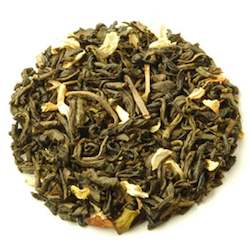
Our signature Jasmine green tea, Jasmine with Flowers, is far removed from the types of jasmine tea often commercially available in teabags and from large producers. Because many of those jasmine teas are produced from lower quality tea leaves and jasmine added as a harsh chemical flavour, jasmine tea has developed a poor reputation that detracts from the elegant, subtle and delicous flavours of jasmine tea done well.
Our uses no additives or chemicals and is produced naturally using a method developed almost 2,000 years ago. Fresh, young tea leaves are picked and during the drying process, natural jasmine flower petals are scattered over the tea leaves to allow them to naturally absorb the scents and flavours.
The result is this balanced, subtle, crisp and fragrant jasmine green tea which is elegant and refreshing with a slight citrus finish and can be enjoyed at any time of day. It pairs particularly well with strong, spicy dishes and seafood as well as making an excellent after-dinner digestif.
also high in catechins, theaflavins, flavonids and polyphenol antioxidants as well has having strong antibactierial qualities.
is also included in the following signature gift collections: The Essentials Collection - £39.95 The World of Tea Collection - £39.95 Supreme Green Collection - £42.95
Story
Jasmine tea may not be the oldest type of tea produced in China, but it is one of the most popular and symbolic in Modern Chinese society and has a significant following the World over.
Jasmine plants were introduced to China in the first couple of centuries AD via India, and within a few hundred years were commonly used to flavour green teas. Fujian is the region best known for jasmine tea production and most importantly, Fuzhou, Fujian where altitude and climate are ideal for the cultivation of both jasmine and tea plants.
Jasmine also has symbolic meaning in China and is commonly served as a welcome beverage in homes and businesses, especially when welcoming guests. Jasmine is also one of the holy flowers of Buddhism used frequently as religious offerings and the buds and flowers are now often used at weddings. Jasmine represents purity and is said to have a celestial fragrance as well as possessing practical effects as an anti-toxin and energiser.
The traditional method for creating jasmine teas is to scatter the jasmine blossoms on the drying green tea leaves in order for the scent to infuse the tea leaves with natural flavour. This method is still used to this day in China, Vietnam and Japan to create jasmine teas.
Unfortunately, many of the jasmine teas on the market today use chemicals and poor-quality tea leaves which result in acrid, bitter and overpowering infusions far removed from the true flavour of jasmine. For a true jasmine tea, the ingredients should list tea le