
Sumatran Shamans Walking Stick
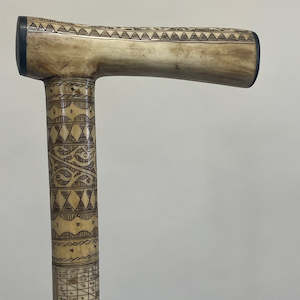
In the jungles of West Sumatra, in the island nation of Indonesia, Batak shamans known as datu looked to the sky on the last moonless night in May. They watched as the belt of Orion slipped below the horizon and the constellation Scorpio rose in the east. This marked the first day of a new month and the first month of the New Year.
Calendar keeping was of the utmost importance to the datu. It was their job to advise farmers when to plant and to determine the correct days to perform rituals—and to avoid the inauspicious days. While much of this can be tied to religion, much of the work a Sumatran shaman performed was integral to feeding the people of their island. In the heyday of shamanic power in Indonesia, much of their cultural events were layered in rituals controlled by mystics travelling from village to village.
These shamans had a number of tools they used to divine the best courses of action for their people. By consulting Batak spellbooks, known as pustaha, they used intricate bone calendars to calculate the best day for a ritual two months ahead of time. The bone calendar, known as a porhalaan, got its name from the Sanskrit word for scorpion—a nod to the constellation kicking off their New Year.