
Stumping Ground
2024
Powder Coated Steel
Variable Dimensions Turumeke Harrington is a sculptor and installation artist whose work sits precisely at the intersection of fine art and spatial design. Her practice is characterized by a poetic pragmatism, using bold colours and large-scale geometric forms to distil complex cultural and historical ideas into striking visual pieces.
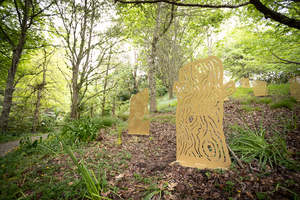
part of a wider research project centered on the colonisation of land in Aotearoa and how this manifests in landscape. The series directly responds to the significance of tumu (stump or stake) in the dispossession and occupation of whenua. These works reference the intensive clearing of bush for timber and farming, as well as the historical use of wooden survey stakes to mark and divide Māori land—stakes that were often removed by Māori residents in protest.
Harrington’s use of accessible, almost cartoon-like forms of stumps is a deliberate choice. Her work often couples critical reflection with humour, drawing the viewer in with its playful colour palette to engage with a serious narrative. The sculptures here act as "ghosts" of the former forest, a portrait of a landscape that was once wild and has been harvested for profit and settlement.
The brightly coloured, seemingly weightless steel forms stand in stark contrast to the heavy history they represent, marking a place for the resilience of Māori presence and a subtle form of reforestation through art. The strategic use of jewel tones and gold in the palette speaks directly to the associations of wealth and value that were extracted from the land, adding a layer of commentary on economic disparity and colonisation.
- Store:
- The Glass House Brick Bay
×